



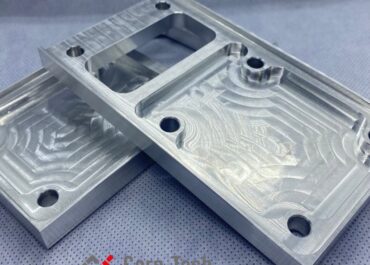
CNC milling is a key metalworking technique that has gained popularity in recent years due to its precision and efficiency. One of the most commonly machined materials using this method is aluminum. In the following guide, we will discuss advanced CNC milling techniques, focusing on aluminum milling. With this information, you’ll learn how to optimize your production processes to achieve the highest quality and productivity.
Introduction to CNC milling
CNC milling (Computer Numerical Control) is a machining process in which a rotary tool removes material from a workpiece. Computer control allows for high precision and repeatability, which is crucial in the production of parts with complex shapes and high quality requirements.
Advantages of CNC milling
CNC milling has many advantages over traditional machining methods:
- Precision: With computer control, highly accurate dimensions and complex shapes can be achieved.
- Repeatability: CNC processes are extremely repeatable, ensuring consistency in the quality of parts produced.
- Flexibility: CNC machines can be quickly switched to produce different parts, which is important for small batch and prototype production.
CNC milling of aluminum – challenges and solutions
Aluminum is one of the most commonly machined metals due to its favorable properties, such as light weight, corrosion resistance and good thermal conductivity. However, milling aluminum poses some challenges that need to be solved for optimal results.
Choosing tools for aluminum milling
A key element for success in aluminum milling is the right choice of tools. The best tools are those made of carbide, which have high hardness and wear resistance. It is also important to use tools with the right rake angle and number of blades to ensure efficient chip evacuation and minimize the risk of jamming.
Machining parameters
Proper machining parameters, such as spindle speed, feed rate and depth of cut, are crucial to achieving high surface quality and long tool life. When milling aluminum, higher speeds and smaller depths of cut are recommended to achieve a smooth surface and avoid overheating of the material.
Cooling and lubrication
Cooling and lubrication play a key role in aluminum milling. Effective cooling of the tool and workpiece prevents overheating, which can lead to material deformation and accelerated tool wear. The use of appropriate coolants and lubricants, such as water- or oil-based cooling emulsions, helps keep temperatures down and improves machining quality.
CNC milling of aluminum at Coro-Tech
At Coro-Tech, we specialize in precision CNC milling of aluminum. Thanks to the use of state-of-the-art machines and tools, as well as the extensive experience of our operators, we are able to complete even the most complex projects with the highest quality.
Design and preparation
Every project begins with careful planning and preparation. Our engineering team works with customers to understand their requirements and customize the machining process to meet their specific needs. We use advanced CAD/CAM design and simulation software to optimize tool trajectories and minimize cycle time.
Implementation
We implement the CNC aluminum milling process on state-of-the-art machining centers that ensure high accuracy and repeatability. We use advanced monitoring and quality control techniques to ensure that each part meets the highest standards.
If you need professional CNC milling services, we invite you to contact us – see how we can help with your projects!

